What suits schools and childcare settings?
The short answer is blinds that are safe around children, tough enough for daily use, and good at controlling glare without making the room gloomy. In practice that usually means keeping cords out of reach or avoiding them, choosing hard-wearing materials and thinking about who will operate the blinds. There are a few different ways to do that, and the right one depends on the room.
Safety comes first
Cords and chains are the main hazard where young children are present. In the UK, BS EN 13120 is the standard that covers the safety of internal blinds, including cords and chains. Blinds supplied for homes and settings are expected to be made with those requirements in mind, and it is worth checking the product information and asking what safety features come with each blind. For nurseries and childcare in particular, there may also be guidance from your regulator, local authority or insurer, so it is worth checking what applies to you.
Ways to reduce the risk include:
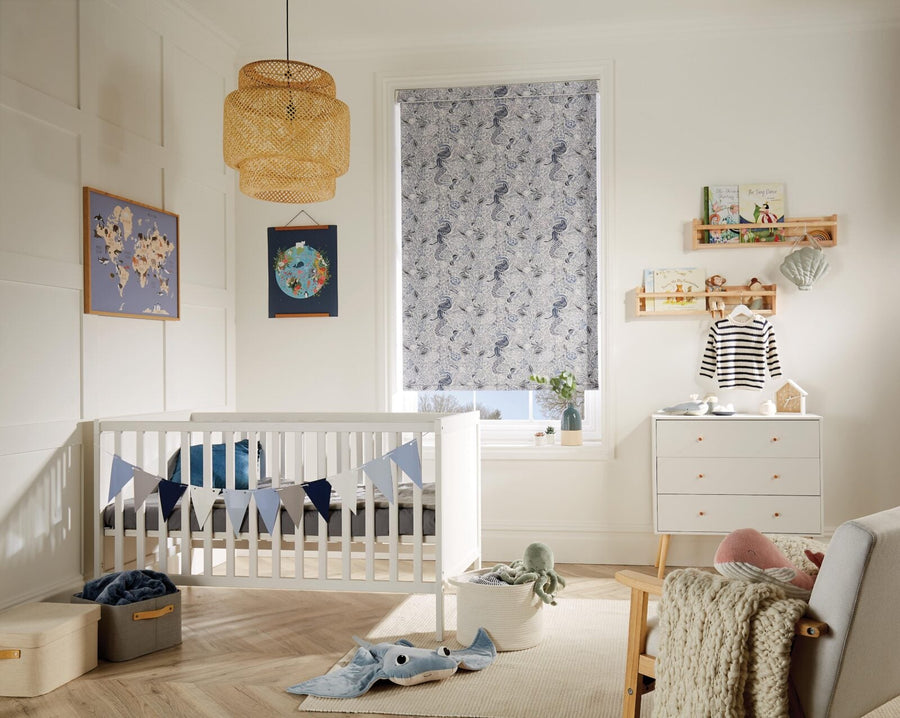
- Choosing blinds that have no cord or chain at all, such as ones operated by a wand, a spring mechanism or a motor.
- Keeping any cord short, secured and out of reach, with tension devices fixed to the wall or frame.
- Placing furniture, cots and climbing places away from windows and blinds.
Our child safety page explains more, and the child-safe blind guide looks at the choices for homes. The same thinking applies to settings with children, though the numbers of children and adults are different.
Durability and daily use
A classroom blind is pulled, bumped and sometimes swung on. A nursery blind is cleaned often. These points help:
- Simple mechanisms last. A basic roller mechanism has few parts to fail. Vertical blinds have a track and carriers that take more wear, though slats can often be replaced individually.
- Fabric choice matters. Look for fabrics that can be wiped clean, and check the care guidance. In a messy room, a flat wipeable surface is generally easier than pleats or folds.
- Size and weight. Large classroom windows need robust fixings and a mechanism that suits the width.
- Chain or wand strength. Controls should withstand frequent use by staff.
Controlling glare
Low sun on a whiteboard or screen is a familiar problem in classrooms. A light-filtering fabric softens the glare while keeping the room bright, which suits teaching. A tilting blind, such as vertical or venetian slats, lets staff adjust the angle through the day. Where a room needs to be darkened, for example for a screen or for a nap room in a nursery, a blackout option may be useful. Our blackout blinds page explains how those work, and gaps at the sides may still let a little light in.
Think too about heat. South-facing rooms can get very warm in sunny weather, and a blind that reflects or filters sunshine can help the room stay comfortable. Results depend on the fabric and the room, so ask us what a given fabric is designed to do.
Fire safety and other requirements
Many public and commercial buildings have requirements on the flame performance of textiles. Some blind fabrics are tested to relevant standards, though this varies between ranges, so it is worth checking each one. If your setting needs flame-retardant or flame-tested fabric, tell us at the start, ask for the product information and check it against the requirements set by your building owner, fire risk assessor or regulator. We would rather find out the right answer for you than guess.
Choosing by room
- Classrooms: roller blinds or vertical blinds in a light-filtering, wipeable fabric, with controls out of children's reach. See commercial blinds and our school blinds page.
- Nursery sleep rooms: blackout fabric, with no cords near cots, and good ventilation.
- Playrooms and messy areas: a wipeable roller blind, kept short enough to stay clear of the floor.
- Offices and entrance areas: a calmer style that suits visitors and parents.
- Hall and gym windows: consider how high the glazing is and whether a motor would make sense. Our motorised blinds page covers it.
Maintenance and planning
- Agree who is responsible for cleaning and checking blinds.
- Check cords, tension devices and brackets at regular intervals.
- Keep a record of what is installed and where.
- Plan for repairs, since a damaged blind in a classroom is best fixed quickly.
- Keep care instructions for the fabrics you choose.
Timing the work
Schools and nurseries often prefer work outside term time or opening hours. Tell us what suits you when you get in touch, and we can talk through how it could work.
Talk to us
If you manage a school, nursery or childcare setting, we're happy to look at the windows and talk through safety and practicalities. Book a free measure to get started.