Why small windows deserve a little extra thought
On a large window, a slightly heavy headrail or a small gap at the side gets lost. On a small one, you notice every detail. A bulky blind can cover a lot of the glass. A narrow gap can let in a bright stripe. A blind that is a little short can look slightly unbalanced.
Small windows turn up in bathrooms, toilets, landings, utility rooms, kitchens, and above doors and stairs. Each has its own priorities, so it helps to start with what the window actually has to do.
Step one: think about what the window is for
- Privacy only. Common in bathrooms and toilets. You want to cover the glass without losing the daylight.
- Light control. A small bedroom window facing a streetlight or early sun still needs proper cover.
- Look. A kitchen or landing window may just need to look neat and stay out of the way.
It can help to think about which one matters most to you. A blind that gives you the privacy you want is more likely to be enjoyed and used every day.
Step two: recess or outside the recess
If the window sits in a recess, fitting inside it gives the neatest result, and it leaves the wall around it clear. It is worth knowing that the blind needs to clear whatever is in the recess, such as handles and the window frame. Our guide to recess or exact fit explains the trade-off in detail.
If there is no recess, the blind sits on the wall or frame. On a small window that means the blind will always be a little wider and taller than the glass, so it is worth deciding how much overlap you would like. A modest overlap hides the edges and blocks side light. Too much starts to look oversized.
Step three: pick a style that suits the scale
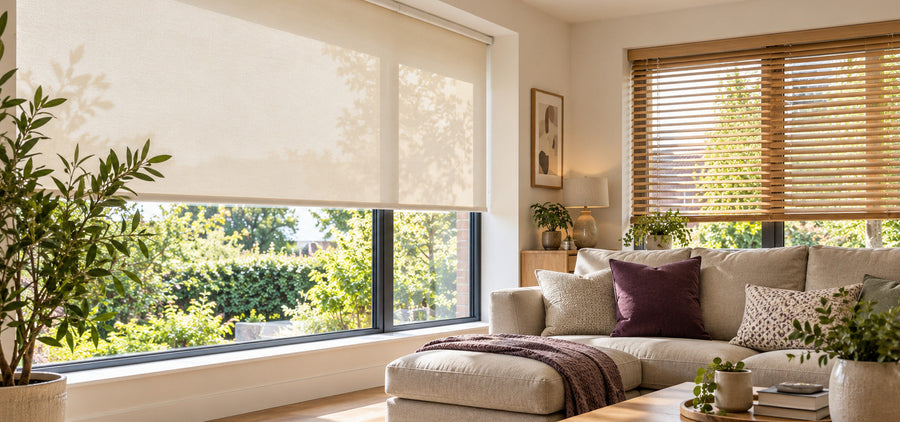
Roller blinds
A good default. The fabric is flat and uncluttered, and when raised it rolls up into a compact tube. Roller blinds suit a small window where you want a clean line. Plain or softly textured fabrics usually work nicely, while large patterns can feel crowded in a small space.
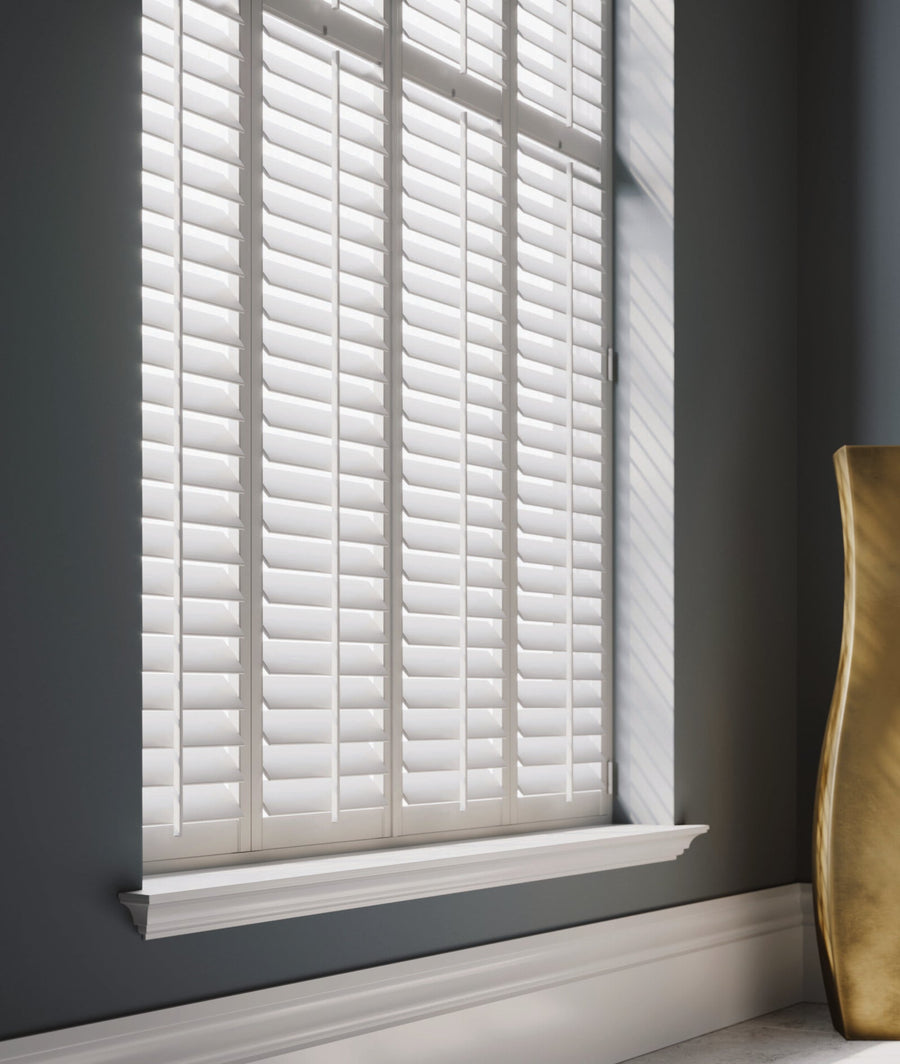
Venetian and faux wood
Useful where you want to angle light while keeping privacy. Slat width matters. Wide slats on a very small window leave few slats to see, and the stack at the top can take up a big share of the glass. A narrower slat often looks more in proportion, depending on the range, so ask us what is available. Faux wood blinds are a common choice for small bathroom windows.
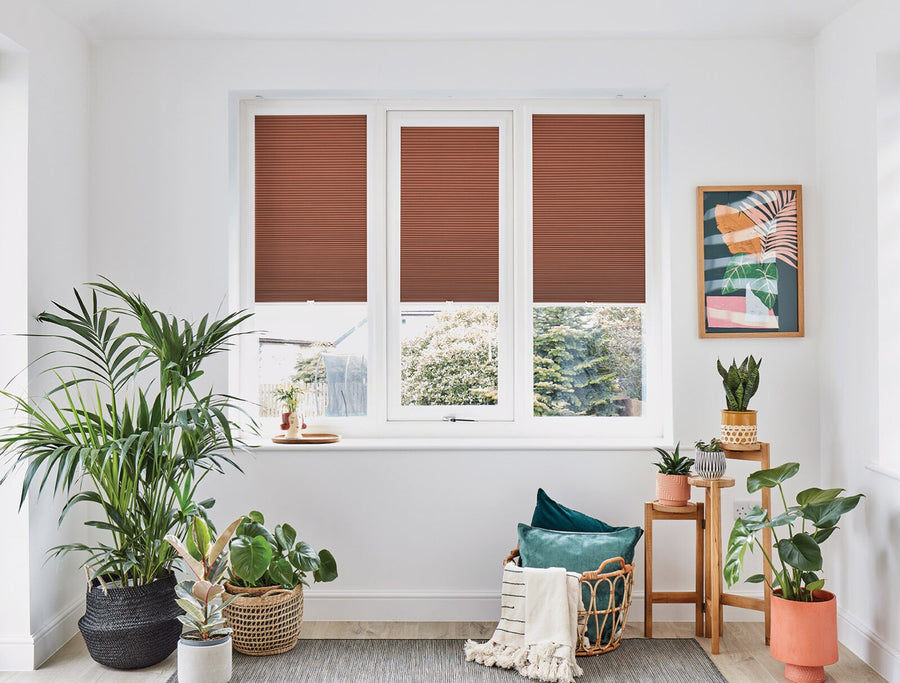
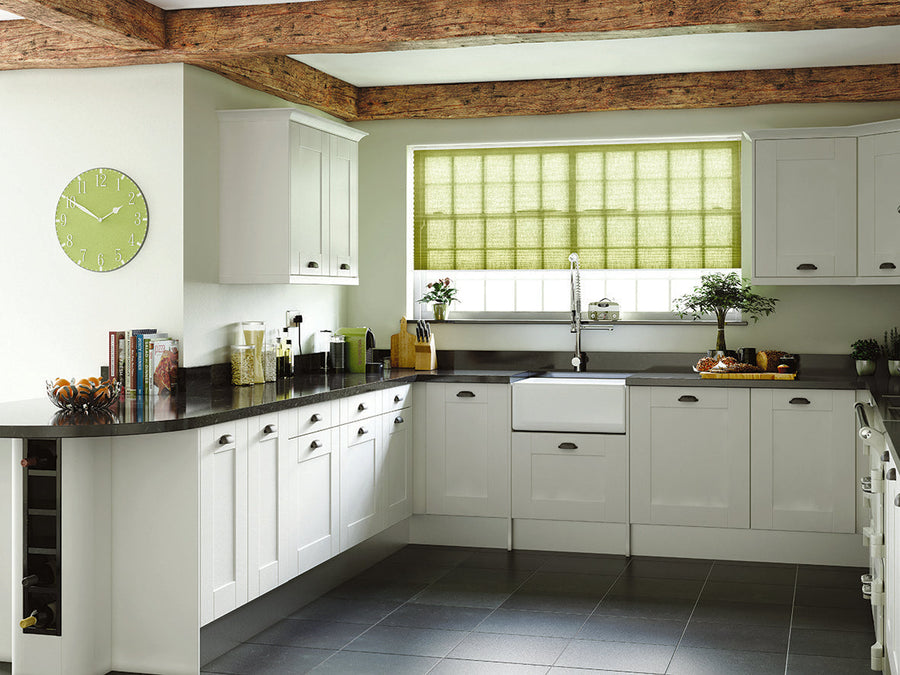
Roman and pleated
Roman blinds add softness, but when raised they stack in folds that cover the top of the glass. On a small window that stack can be a significant part of the view. Pleated blinds pack down more tightly and are worth considering for small or unusual shapes.
Perfect Fit
For uPVC windows that suit them, a frame-fitted blind avoids drilling and keeps the window looking tidy. Not every window works, so our Perfect Fit compatibility guide is a helpful place to check.
Details that matter more on small windows
- Headrail depth. Ask how deep the headrail is for the range you like, and whether it will clear your window handle.
- Controls. A chain or cord hanging beside a tiny window can look busy. Cordless or wand options can look tidier and are safer around children.
- Colour. Light colours tend to make a window feel larger. Our colour guide explains how light direction changes what you see.
- Stack height. When the blind is raised, how much glass does it cover? On a short window, that matters.
- Obscure glass. If the glass is already frosted, you may only need a simple blind for light control at night.
Helpful things to plan for
Measure the fitting position as well as the glass. The blind needs to be sized for the fitting position, not just the glass. Measure the recess or frame too, and note anything that sticks out.
Made to measure suits small windows. Small windows are often not standard. Our explanation of what made to measure means shows why a blind cut to your window tends to look better.
Plan the cord position early. It helps to decide where cords or chains will hang and to keep them tucked away from furniture, beds and cots.
Let us measure it
Small windows reward accurate measuring, and the room around them often changes the best choice. We offer a free home measure across Stockton-on-Tees and wider Teesside, and you get a quotation before you commit. Book a free measure and we can talk through options at the window itself.