Walk into any blind shop and you'll hear both words. Dim-out, room darkening, blackout. They sound like steps on a dial, and in a loose way they are. But the labels vary between suppliers, so it helps to know what is going on in the fabric.
The idea in one sentence
A dim-out fabric cuts down the light that passes through it. A blackout fabric is made to stop as much light as it can. Neither term has one fixed meaning, so how dark a room gets depends on the fabric, the blind and how it is fitted.
What dim-out usually means
Dim-out fabric is typically a denser weave or has a coating that reduces glare and brightness. You can often still see that it is daytime. The room feels calmer and the sun stops being dazzling, but it does not go dark.
It tends to suit:
- living rooms where you want comfort and screen visibility without gloom
- home offices with glare on monitors (see blinds for home offices)
- spaces where you still want some daylight and a sense of the outside
What blackout usually means
A blackout fabric is built to block light, often with a thicker layer or a special backing. In a room with a well-fitted blind, it can make the space very dark, which is why many customers choose it for bedrooms, nurseries and for anyone sleeping after a night shift. Our blackout blinds page covers the range.
It tends to suit:
- bedrooms, particularly with streetlight or bright mornings
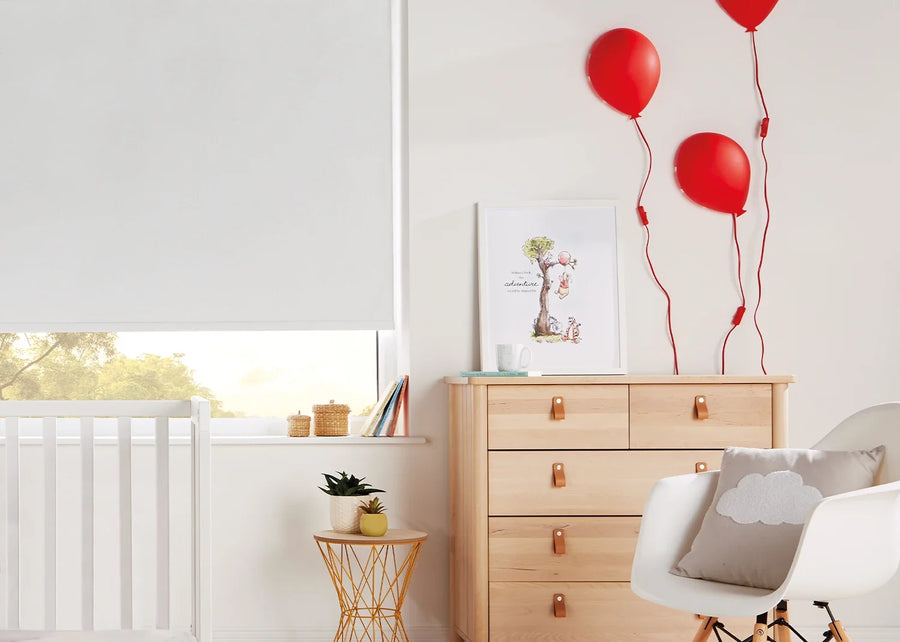
- nurseries and children's rooms for naps
- media rooms where you want a controlled picture
- shift workers who sleep in the day
Where a little light can still get in
Here is something many customers find helpful to know. The fabric is only half the story, and light can still get in at the edges.
- Side gaps. A blind fitted inside a recess leaves a small gap on each side. An outside fit that overlaps the window gives less leakage. See recess or exact fit.
- Top and bottom. Light can come over the headrail or under the bottom bar, and sometimes through the roll gap on a roller blind.
- Pinholes and seams. On some products, light can show where the fabric is stitched or fixed. This varies between ranges.
- The room itself. A bright landing light or a glowing standby light can add as much light as the window.
So no blind gives a pitch-black room, but a blackout fabric, correctly sized and fitted, helps to make a room considerably darker. Please ask us which fabrics in the range are blackout, and how the fitting affects leakage.
Which blind types come in each
Many types can be made in both light levels, depending on the range.
- Roller blinds come in dim-out and blackout fabrics, which makes them a popular choice for a controlled look.
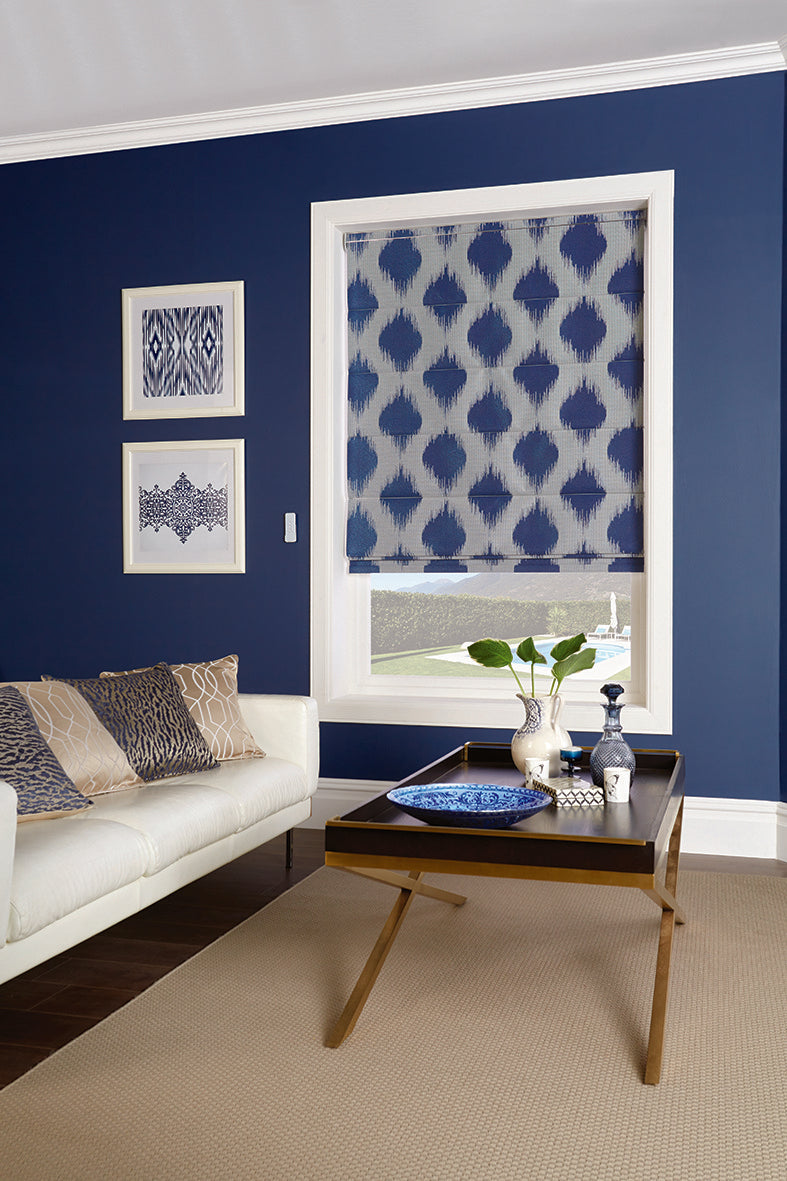
- Roman blinds can be lined for extra light control, depending on the range.
- Pleated blinds and conservatory blinds are more often used to soften light than to block it, and we're happy to check what is available.
- Day and night blinds alternate sheer and denser stripes. They offer privacy and reduced glare, but they are not a blackout.
Slatted blinds, such as venetians, allow light between the slats even when closed, so they suit light control better than full darkness.
Choosing for each room
Main bedroom. Blackout, outside fit if you can, and curtains over the top can be a lovely addition if the window leaks light. More in bedroom light control.
Nursery. Blackout is popular for naps. Cords are the key concern, so a cordless or motorised option, or one with a safe control position, is worth looking at. Our child safety page and child-safe blind choices explain why.
Living room. Dim-out is often enough, unless you watch films in daylight.
Kitchen. Dim-out in a wipeable finish, unless the room is next to a night-time sleeping space.
Rooms where privacy matters more than darkness. You may not need either. Read privacy without darkness.
A note on colour and heat
A light-coloured fabric can look pleasant on the room side while the backing does the work. Fabrics differ, so if heat or energy matters to you, please ask us what a fabric is designed to do. If glare and fading are on your mind, let us know which way the window faces.
How to decide
It can help to think about whether you want the room dark enough to sleep or just comfortable enough to relax. If you're undecided, book a free measure and we'll show fabric samples against your own window, so you can see for yourself.