What is a cellular blind?
A cellular blind, often called a honeycomb blind, is made from pleated fabric that is joined into a row of small hollow tubes. When you look at the edge, the cross-section resembles a honeycomb. The point of that shape is to trap air in the cells, giving the blind a little insulating ability that a single flat layer of fabric does not have. You can see the range on our cellular blinds page.
How the structure works
Still air is a poor conductor of heat. By holding pockets of air close to the glass, a cellular blind slows the movement of warmth between the room and the window. Some designs have a single layer of cells, while others have two layers, which creates more trapped air but makes the blind a little deeper when it is raised. Ask which type you are being shown, because the stack size and depth differ between ranges.
Where cellular blinds help
- Cold windows in winter. They reduce the chilly feeling near the glass, which we discuss more in our thermal blinds article.
- Sunny windows in summer. The same structure can limit how much heat passes through, depending on the fabric.
- Bedrooms. Some fabrics block a good deal of light, and the trapped air also dulls some outside noise. The effect on noise is small, so think of it as a nice bonus rather than soundproofing.
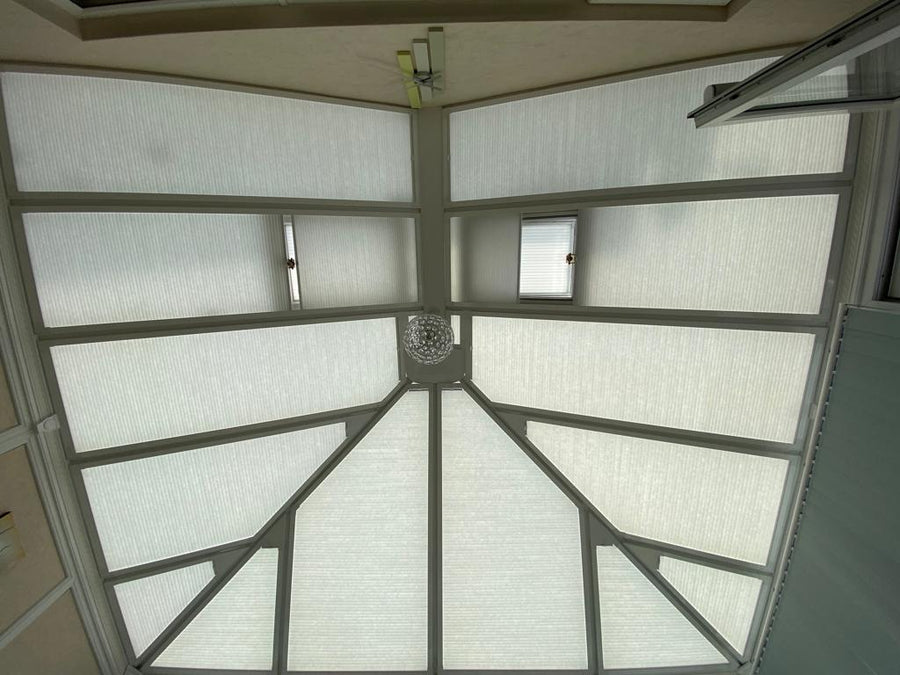
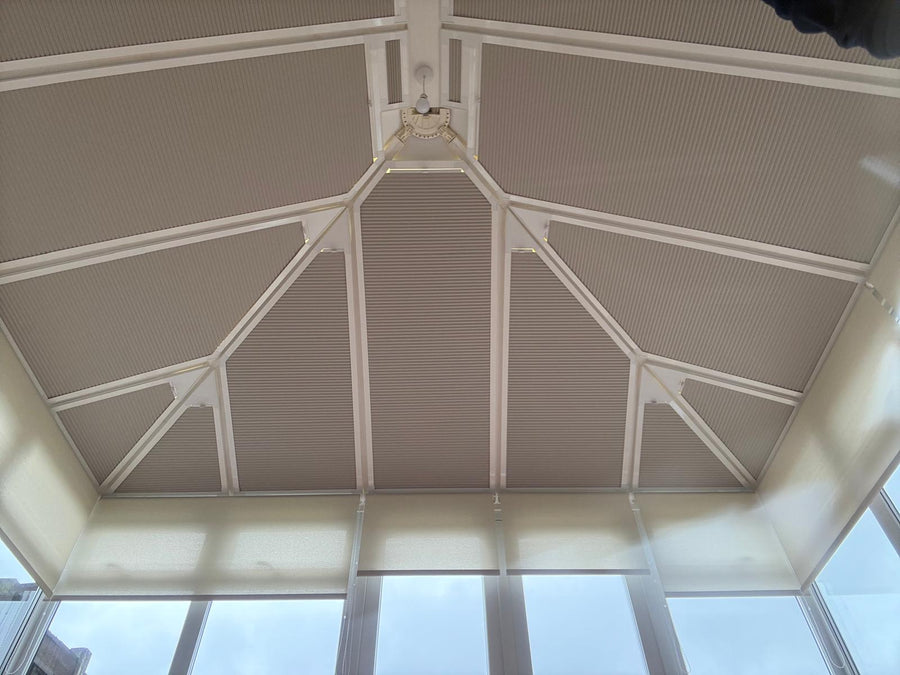
- Odd-shaped windows. Cellular fabric is made to follow shapes such as roof windows, conservatory panes and angled glass, as the blind can run along tracks. Ask which shapes a given range can handle.
Light and privacy
Fabrics come in sheer, light-filtering and blackout versions. Light-filtering ones soften daylight and give privacy while you can still see that it is bright outside. Blackout types add a backing for dark rooms. Light can still creep in around the edges, particularly with a blind fitted inside a recess. Our bedroom light control guide explains the options.
Good to know about honeycomb blinds
- Draughts need a different fix. Gaps at the sides let air through, so if your problem is a leaking frame, it is best to sort that first.
- The effect is modest. The benefit depends on the blind, the glass and the room. They are a useful part of a comfortable window, rather than a replacement for insulation.
- The look is distinctive. The folds give a clean, pleated appearance. If you want a very flat finish, a roller may suit better. See roller blinds.
- Cleaning needs a gentle touch. The hollow cells can collect dust. Dusting or light vacuuming is usually the first line, but the safe method depends on the fabric, so follow the care instructions.
- Moisture. Fabric can hold damp, so they may not be ideal for a steamy bathroom.
Cellular or pleated?
Standard pleated blinds are a single layer of folded fabric, whereas cellular blinds are built with hollow cells. Pleated blinds are lighter and often a flat, slim stack, while cellular ones add insulation. Both can be fitted to unusual windows. Our pleated blinds page covers the simpler option.
Fitting and controls
- Fit as close to the glass as possible. This reduces the gap that air can move through.
- Cords or cordless. Many are operated by pushing and pulling the bottom rail, which avoids a hanging cord. If cords are used, see our child safety page.
- Top-down, bottom-up. Some designs let you lower the top edge so you can let in light but keep privacy at eye level.
- Motorised versions. Available in some ranges for windows that are hard to reach.
Is a cellular blind right for you?
Consider one if you have a cold or very sunny room, a skylight, or a window where a flat blind looks too stark. If you have no problem with temperature and prefer a very simple style, another type may do the job just as well.
Have a look at the product information for the exact insulation, light and cleaning details of the fabric you like. Book a free measure and we can show you samples, talk about the window and help you decide whether honeycomb is worth the choice.