Can one blind block light and insulate?
Often, yes, to a degree. Some fabrics are made to block most light and to add a layer of insulation against a cold window, and some are also made with flame-retardant properties. What you get depends heavily on the fabric, the fit and the window, so treat any combined claim as a starting point and check the maker's technical details for the exact fabric. A realistic expectation helps, as no fabric does everything perfectly.
What each word usually means
Blackout
A blackout fabric is made to stop light passing through the cloth. It does not stop light entering round the edges of a blind, which is a matter of how the blind is fitted. A fabric can be properly opaque and still leave a halo of light at the sides. Our blackout blinds page explains this in more detail.
Thermal
Thermal fabrics usually have a backing or coating, or a structure that traps air, which helps slow the movement of heat through the window area. A blind can help a room feel warmer or cooler, but it is only one factor beside the glazing, the frame and the draughts. It works best as a helpful extra alongside good insulation, and the benefit varies.
Flame-retardant
This describes a fabric made or treated to resist flame. It does not mean fireproof, and it relates to specific tests that the maker should name. Our guide to flame-retardant fabric labels explains how to read them.
How combined fabrics are usually made
Many blackout and thermal fabrics are layered, with a coloured face fabric, a coating or core that blocks light, and a backing. The coating that blocks light is often the same layer that adds some insulation. A flame-retardant property may come from the yarn or from a finish. That layering is why these fabrics can be a little stiffer, heavier or less soft-looking than a simple light-filtering cloth.
Things to weigh up
- Look and feel. Blackout and thermal coatings can make the back of a fabric look plain or slightly shiny, and the front can look flatter than an open weave.
- Weight and size. Heavier fabrics may have limits on how wide a blind can be made.
- Daylight. A blind that blocks light blocks it all day. In a living room you might prefer a fabric that filters light, and in a bedroom you probably want the opposite.
- Light gaps. Even with a blackout fabric, edge gaps let light in. Fitting outside the recess or adding side channels, where available, can reduce this, and your window shape affects the options.
- Care. Coatings can be marked by harsh cleaning, so it is kind to follow what the care guidance suggests.
- Availability. Not every fabric combines all three properties, and not every colour of a given fabric does either.
Which blind type suits it
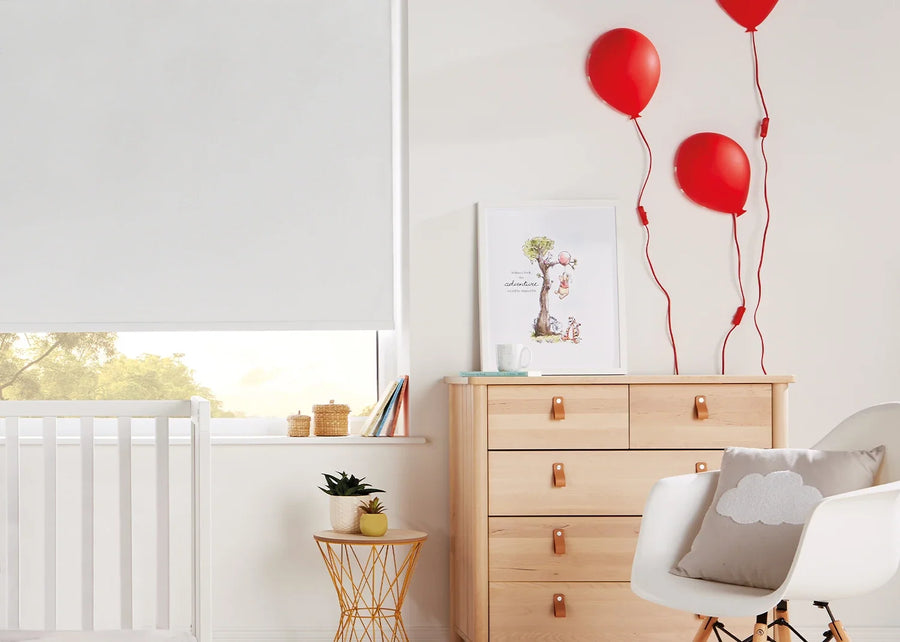
A roller blind is a common choice for combined fabrics because it is one flat sheet and hangs simply. Other styles, such as pleated blinds or Romans, can also be made with suitable fabrics, and each has a different look and different edge gaps. A blind that is fitted tight to the glass will behave differently from one hung on the wall around the window. We can talk through the options for your window.
Choosing the fabric
- Decide what matters most. Darkness, warmth and fire performance are not equally important in every room, and a fabric strong in one may be modest in another.
- Look at the technical details. Check the maker's information for the exact fabric and colour, particularly for flame performance. We can point you to the details, and you can browse the Decora and Louvolite collections we offer.
- See it in your room. Hold a sample against the window in daylight and in the evening, because colour and opacity change.
- Think about the whole window. Draughty frames, single glazing and bare walls are separate issues that a blind cannot solve on its own.
A realistic picture of the benefit
A blind can make a noticeable difference to comfort, though the exact effect on energy bills or temperature will depend on your home. Light, heat and fire performance depend on the fabric, the way it is fitted and the room. Use these fabrics where their strengths matter to you, and choose something simpler where they do not.
Next step
Tell us which of the three matters most and we'll suggest fabrics worth sampling. Book a free measure and we'll bring ideas to the window.