The short answer
A blind slows heat down, though it will not stop it completely. A roof window faces the sky, so strong sun pours straight onto the glass for much of the day. If the blind sits on the inside, some of that heat has already passed through the glass before the fabric meets it. How much difference you notice depends on the fabric, how closely the blind fits, whether it is closed at the right time, and how the room is ventilated.
Why roof windows heat up so much
A vertical window sees the sun at an angle for part of the day. A roof window is tilted towards the sky, so it takes the sun more directly, and in a loft the heat also rises and collects under the roof. Rooms in the roof space often have less insulation depth than you might expect, so warmth builds up quickly on a sunny afternoon and lingers into the evening.
What the fabric does
Light, reflective colours tend to bounce more of the sun back towards the glass than dark ones, which soak it up. Many roof blind fabrics have a reflective or metallic-feeling backing for this reason. Ask to see the fabric against the window and have a look at the product information for what the maker says about heat reduction, because ranges differ and it is worth reading each claim with care.
A blackout fabric is not automatically a cool fabric. It blocks light, but a dark one can still absorb warmth. If you want a dark bedroom and a cooler room, ask about fabrics designed for both jobs.
Fit and gaps matter
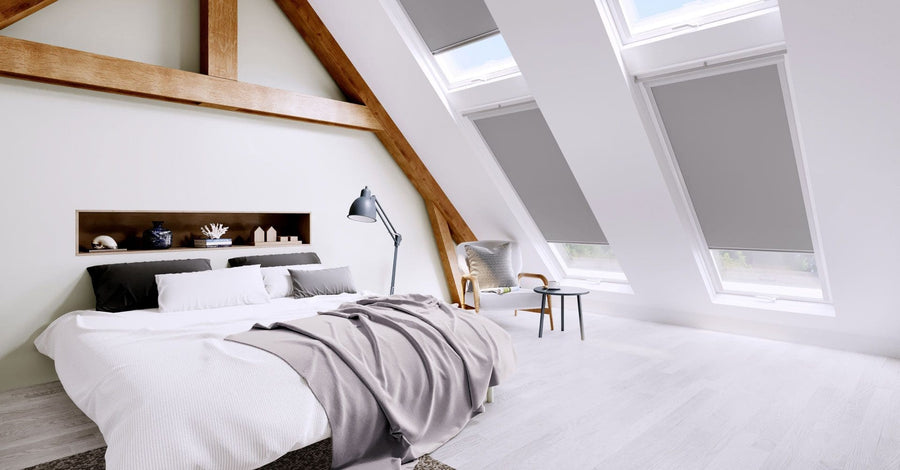
A blind that runs in side channels or rails, close to the glass, traps a thin layer of air between fabric and window and stops light and heat leaking round the edges. A loose blind with gaps lets warmth slip past. Made-to-measure sizing helps here, since a standard size that is slightly small leaves a visible margin. Our page on Velux roof window blinds covers how blinds are made to match a particular window.
Inside or outside
Here is a helpful thing to know about internal blinds. The most effective place to stop sun is on the outside of the glass, before it enters the building. External blinds and shutters exist for some roof windows, but they cost more, need to cope with weather and are not an option on every window. An internal blind is a practical and widely used choice, and it helps to keep expectations realistic: it will take the edge off, rather than turn the loft into a cold room.
Habits that help
- Close the blind before the sun hits. Closing it before the room warms up works better than waiting until the space is already hot.
- Ventilate in the morning and evening. Open the window when the air outside is cooler, then close it and lower the blind for the hot part of the day.
- Use a pole or motor if it is out of reach. A blind that is easy to reach is much easier to use. See motorised blinds.
- Remember the other windows. One shaded roof window can only do so much if the room has several.
When a blind needs a little help
If the room is uncomfortably hot even on moderately warm days, the cause may be the building itself: limited roof insulation, a lot of glazing or poor air movement. A blind helps, and those are separate issues for a builder or surveyor to look at. We're happy to be open about what a blind can and cannot do.
Choosing with your room in mind
Start with how you use the room. A home office needs glare control and a pleasant temperature, so a light-filtering reflective fabric may suit. A bedroom needs darkness, so blackout with a heat-aware backing is worth asking about. Look at our overview of roof blinds for the main styles, and tell us which way the window faces, because a south-facing roof window works harder than a north-facing one.
Fit matters too. A blind that sits tight on its rails and has been measured for your window will do more than a loose one. If you're not sure which type of roof window you have, our guide to identifying your roof window will help.
Book a free measure
If you would like a second pair of eyes on the window, book a free measure and we'll talk it through with you at home, with the actual glass in front of us. Or call us on 01642 424250.