What survives heavy daily use?
In a busy office or reception, a blind is used by many people, often in a hurry, and nobody feels responsible for it. The ones that last are usually the simplest: a sturdy mechanism, a fabric that wipes clean and controls that are easy to use gently. There is no single answer, since the right blind depends on the window, the room and how it is used. Here is a friendly way to think it through.
Mechanisms: fewer parts, fewer failures
Roller blinds
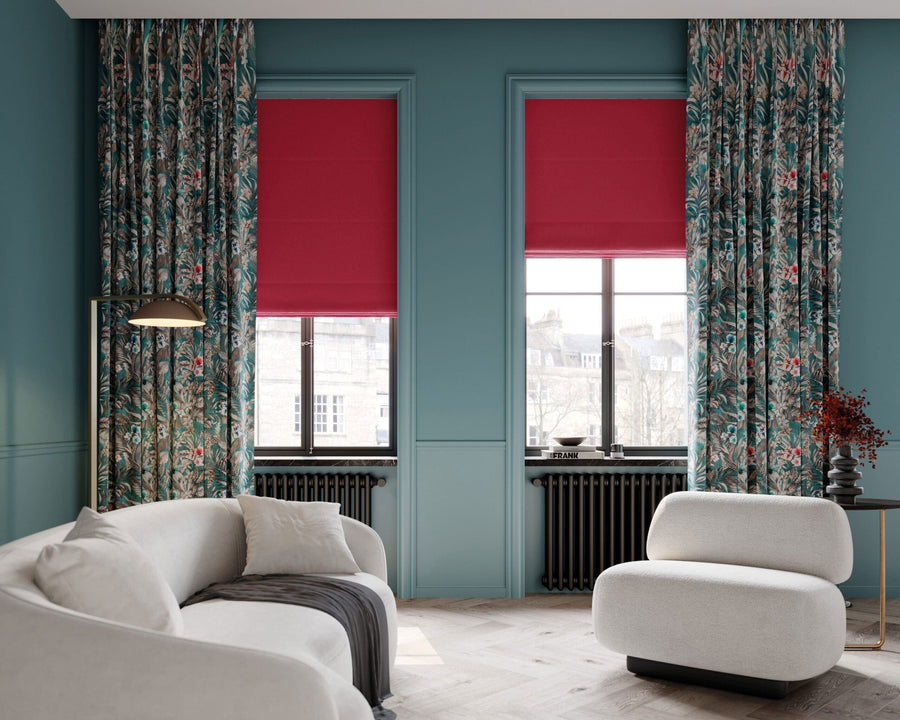
A roller blind has a tube, a clutch and a fabric, and not a lot else. That simplicity is why it is a popular choice for offices. A chain control is straightforward to use, and if the chain is looked after, it can cope with regular use. Gentle pulling helps a blind last, so a firm chain and a well-fitted clutch matter. Our roller blinds page has more detail.
Vertical blinds
Vertical blinds suit wide windows and glazed walls, and the slats rotate to follow the light. They have more moving parts than a roller: a track, carriers, a rotating rod and a pull cord or wand. Individual slats can often be replaced if one gets damaged, which is useful where a few get bent or marked. Gentle handling helps the mechanism last, and a wand control can be easier on it than a loose cord. See vertical blinds.
Venetian and other slatted blinds
Slatted blinds give precise light control, though slats can bend if pulled hard, and dust collects on them. They need more cleaning than a flat fabric surface.
Motorised blinds
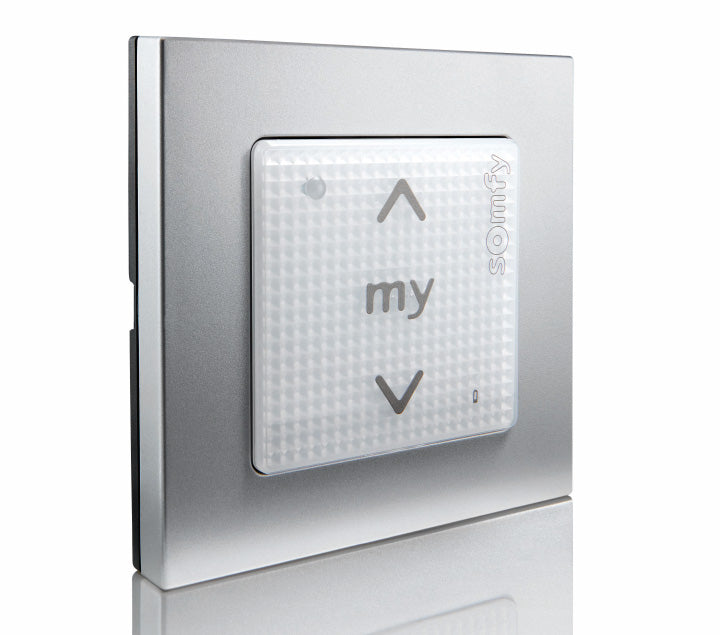
A motor removes cords and chains and lets blinds be operated with a button or a remote, so there is less pulling and dragging. Somfy makes motors for blinds, and motorised systems can be a sensible choice for large or hard-to-reach windows. They add cost and rely on power or a battery, so think about maintenance too. See motorised blinds.
Fabrics: easy to clean, steady in sun
- Wipeable surfaces: a flat, smooth fabric that can be wiped is easier to keep presentable than a textured weave that collects dust. Check the care guidance for each fabric.
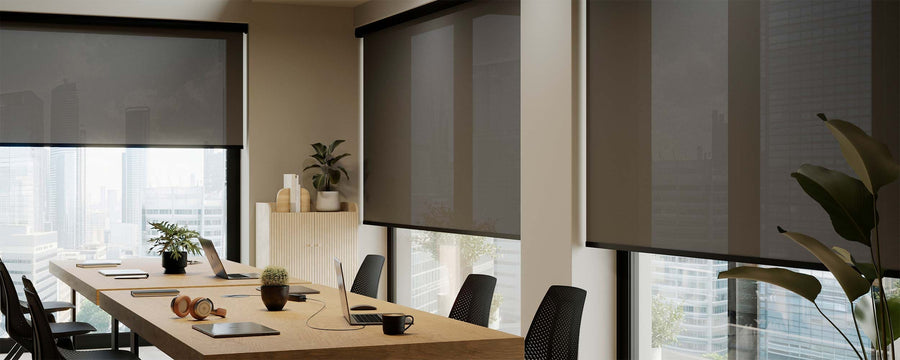
- Light filtering or solar control: in a sunny office, a fabric that cuts glare but keeps the daylight is often more useful than a very dark one. Ask what a particular fabric is designed to do.
- Colour: light and mid tones can hide minor marks better than very dark or pure white fabrics, depending on the surroundings.
- Flame performance: some commercial buildings require tested fabrics. Not every range is the same, so check the product information and compare it with your building's requirements.
Think about the whole run of windows
An office usually has many windows, and the blinds are seen together. Matching fabric, matching drop heights and consistent positioning look professional, while a mix of styles can feel less cohesive. A popular approach is to choose one style for the whole building and keep a spare or two for replacement. Our commercial blinds page and the office blinds page give more information.
Reception areas are special
A reception is the first thing visitors see, and often has large glass at the front. A few points to consider:
- Privacy: you may want to shield a desk or waiting area from the street without losing the light.
- Glare: screens near the front door can be hard to read in sun.
- Appearance: a tidy, uniform line of blinds gives a reception a welcoming look.
- Access: it helps if the blinds can be reached easily for cleaning and adjustment.
Keeping them looking good
Every blind likes a little care. Some businesses agree a simple routine, and some arrange a regular visit from a supplier. Whether a contract is worth it depends on the number of blinds and how often you expect them to need attention. If you're thinking about it, it can help to ask whoever you buy from what is included and how repairs are handled.
A basic in-house routine might include:
- Dust blinds regularly, working from top to bottom.
- Wipe marks promptly using the method in the care guide.
- Check chains, cords and brackets for wear.
- Report damaged blinds early, before a small fault becomes a bigger one.
- Keep records of sizes and fabrics for reordering.
Helping blinds last longer
- Controls placed where they are less likely to be pulled or caught.
- Fabric chosen for cleaning needs as well as looks.
- Blinds matched in size to the mechanism.
- Brackets fixed into solid surfaces.
- A little thought for windows that open into the blind or radiators underneath that heat it.
Cords and safety
Even in an office, visitors may bring children, and cords can catch anyone. See our child safety page for general advice on cords and chains.
Getting accurate measurements
Large commercial windows are often not identical, so accurate measuring is the foundation of a good result. Book a free measure and we'll look at the windows and talk through the options for your space.