Can you use blinds and curtains together?
Yes, and plenty of homes do. Layering means putting a blind close to the glass and curtains in front of it. With a little planning, it gives you flexible light control, a softer look and a bit of extra comfort. A few simple proportions help it look light and balanced. Here is how to get a lovely result.
Why layer at all?
- Flexible light: the blind handles daytime glare and privacy, while the curtains close in the evening for a cosier feel.
- Warmth: two layers trap a little air between them, which can help a room feel less draughty. How much difference it makes depends on the windows and the fabrics, so it is best seen as a welcome extra.
- Style: curtains add softness and colour, while a blind adds structure and tidiness.
- Darker rooms: a blackout blind plus a lined curtain can help a bedroom feel properly dark, with fewer light gaps at the sides.
Pairings that work
Roller blind and curtains
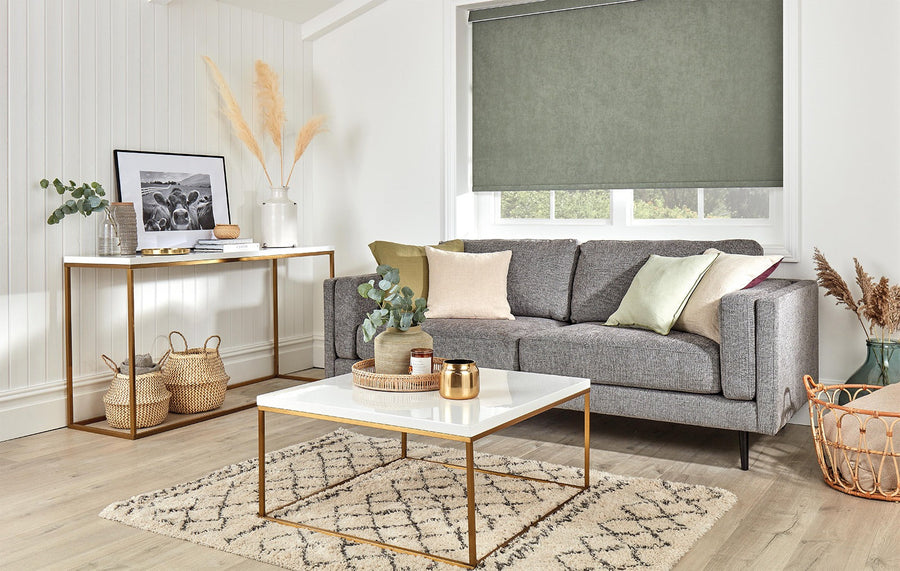
A roller blind is slim, so it sits neatly behind curtains. It is a practical pair for bedrooms, where a blackout roller does the heavy lifting and the curtains add comfort. Plain roller fabrics also leave the curtain pattern to do the talking. See roller blinds.
Roman blind and curtains
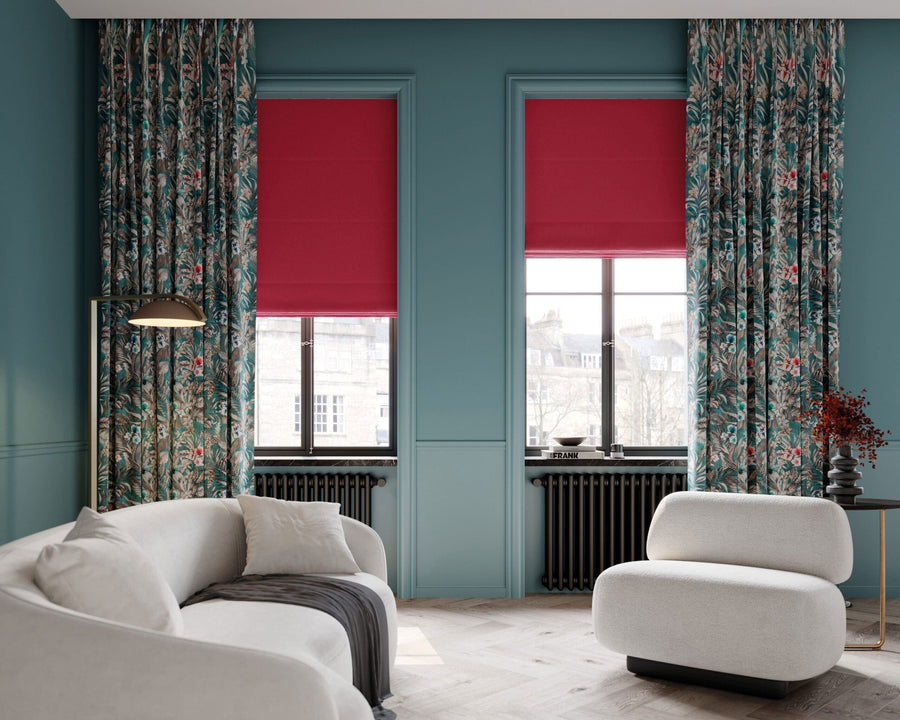
A Roman blind folds up into soft pleats, so it brings texture. With curtains it can look rich, though two fabrics at the same window work best when they suit each other. A plain Roman blind with patterned curtains, or the other way round, usually looks lovely. Our Roman blinds page has more, and the curtain or Roman blind guide compares them on their own.
Venetian blind and curtains
Slatted blinds give precise light control and look crisp behind soft curtains. They suit living rooms and studies where you want to tilt the light.
Sheer curtains and a blind
A sheer curtain softens daylight and gives a little privacy while the blind stays open. Closing the blind gives full privacy at night.
Proportions and placement
Layering looks its best when the proportions are generous:
- Try mounting the track or pole above the window. This gives the curtains room to hang clear of the glass and makes the window feel taller. See curtain tracks and poles.
- Extend beyond the sides. Curtains that stack back past the window frame let the full glass show when open, instead of covering it.
- Keep the blind inside the recess if there is one. A blind inside the recess and curtains outside it is the classic layout, as the two do not fight for the same space.
- Allow for depth. It helps to check that the blind can be raised and lowered without catching on the curtains, and that curtains do not snag on the blind controls.
- Think about radiators. Long curtains over a radiator can trap heat and block warmth from reaching the room. Shorter curtains or a different arrangement can work well.
Practical points
- Cords: keep blind cords and chains out of reach, and make sure curtain pulls do not create loops. See our child safety page.
- Operation: think about which layer you'll use daily. If you only ever close the curtains, the blind may not be needed.
- Cleaning: fabric collects dust, so two layers means two things to look after. Check care instructions for each.
- Windows that open: check handles and opening sashes against both layers.
- Budget: if you cannot do both now, a good blind first and curtains later is a common way to build the look gradually.
Colour and pattern
A calm approach is to keep one layer plain. If the blind is a neutral, the curtains can carry colour or pattern. If the curtains are plain, the blind can bring texture. Taking small samples home and looking at them in the room at different times of day is a lovely way to choose, because daylight changes how fabric colour looks. Our colours and fabrics page is a good place to start.
When one layer may be enough
Layering suits many windows, though not every one. In a very small window or a narrow recess, two layers can feel crowded. In a kitchen or bathroom, fabric curtains collect steam and splashes. Sometimes one well-chosen blind is all a window needs.
See it in the room
It is much easier to judge layers when you can see the window in front of you. Book a free measure and we'll look at your window, talk through pairings and measure up for both.