The quick answer
The most effective way to keep a room cooler is to stop the sun from heating it in the first place. Closing a blind before the sun reaches the glass works better than closing it once the room is already hot. Blinds are not a replacement for air conditioning, but used thoughtfully they can take the edge off a hot spell.
Why windows matter
Sunlight comes through glass as heat. It warms the floor, furniture and walls, and those objects then hold the warmth. A blind that stops the sun at the window is better than a curtain hanging inside the room, because it keeps the heat from entering. Even so, the exact result depends on the fabric, the glass and the size of the window.
Start with which way the window faces
- South-facing: strong sun through the middle of the day. A blind that can be lowered at this time earns its keep.
- West-facing: low, hot sun in the late afternoon and evening, which can be tricky to manage. It often benefits from the most thought, since the rooms are already warm by then.
- East-facing: morning sun, so close it early, and open it later.
- North-facing: usually little direct sun, so heat gain is less of a problem.
What the fabric does
- Light, reflective colours. Pale and metallic-backed fabrics tend to reflect more sun than dark ones. A white or silver side facing the glass usually helps.
- Dense or blackout fabrics. Block more light and heat, though a dark room in the daytime may not be what you want.
- Open or sheer weaves. They cut glare but let more heat through.
- Cellular fabric. The air pockets slow heat passing through. See cellular blinds explained.
Product information may give a technical figure for how well a fabric deals with solar heat. If it matters to you, we're happy to help you find it, as well as looking at how the fabric looks.
Timing and habits
- Close the blinds on sun-facing windows early in the day, before the room warms.
- Open windows at night and early morning when the air outside is cooler, then close them as the day heats up.
- Leave a small gap if you need some daylight, rather than opening the blind fully.
- Remember the windows you rarely use, such as spare rooms, which can become heat traps.
Roof windows and conservatories
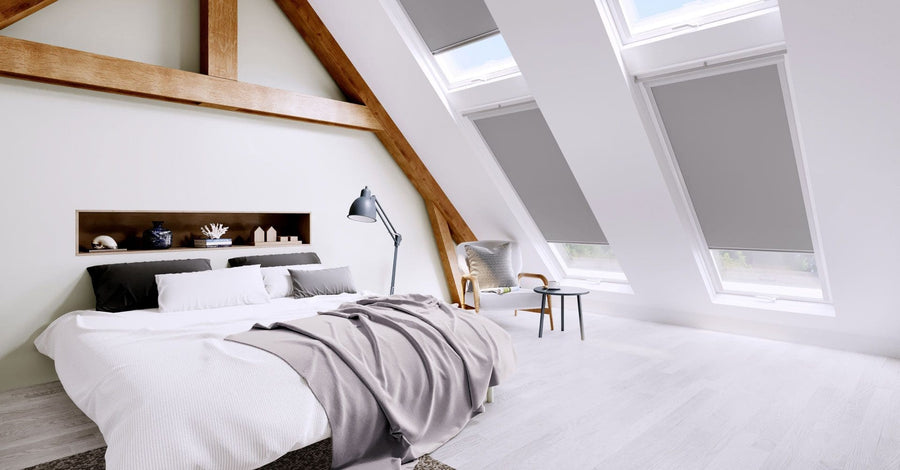
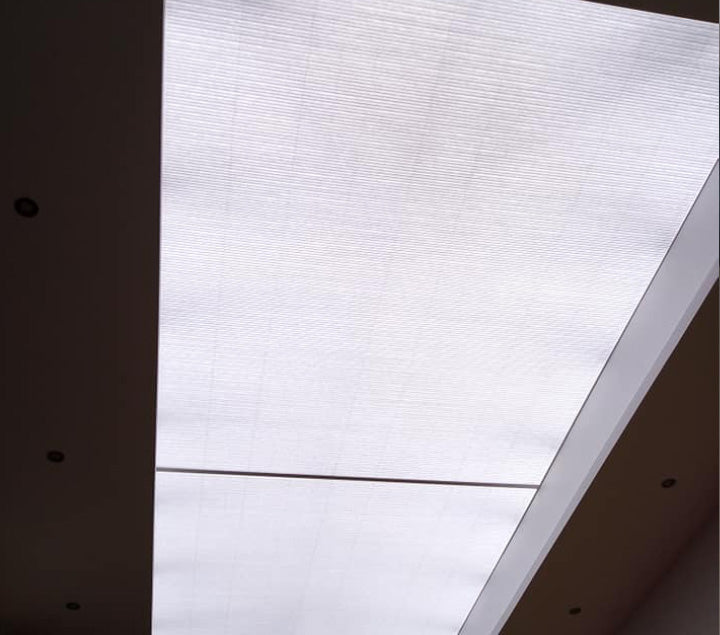
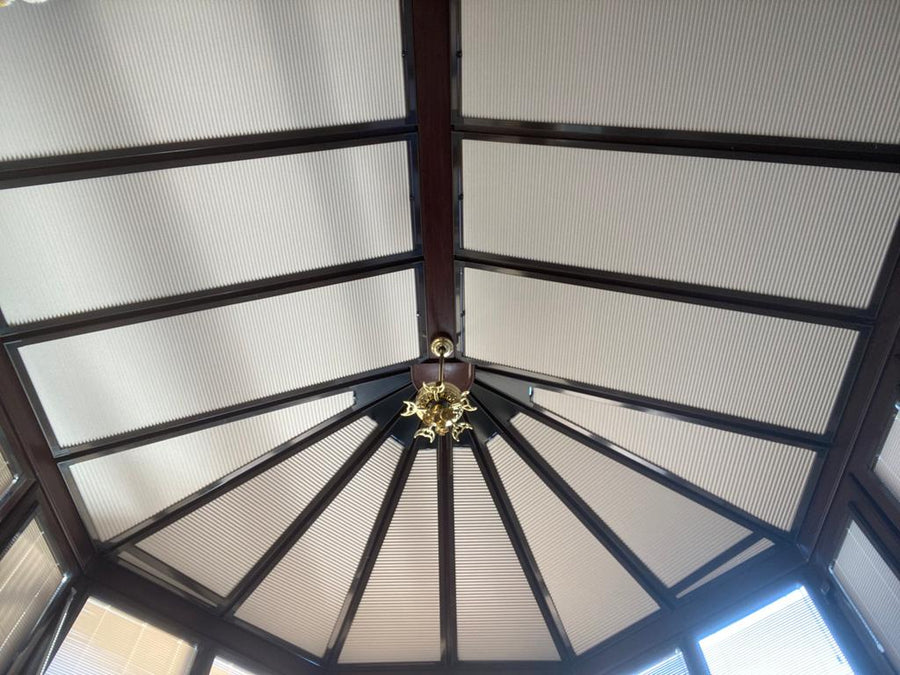
Glazing in a roof receives the strongest sun and is often the hottest spot in the house. A blind fitted outside the glass can stop heat before it reaches the pane, but outside blinds depend on the roof window type, so it is worth looking at our roof blinds page and the Velux roof window blinds page. For a conservatory, see conservatory blind choices. Blinds on the inside still help, though they cannot fully stop heat that has already passed through the glass.
Blinds that work well for sun control
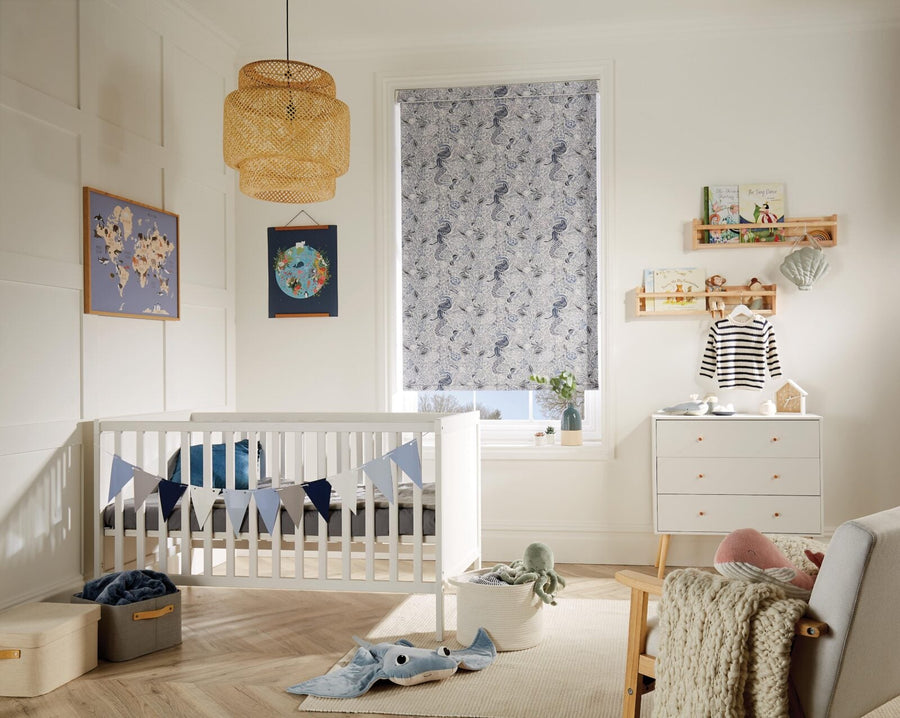
- Roller blinds in a reflective or solar-filtering fabric, which are simple and tidy. See roller blinds.
- Venetian blinds that can be tilted to cut the direct sun while letting in some light.
- Vertical blinds for tall glazing and patio doors, angled away from the sun.
- Shutters, where the louvres can be set to angle the light.
Each has its own balance of light, view and heat, so it is lovely to choose the one that suits each window.
Automation can help
If you're out all day, a timer or a sun sensor on a motorised blind can lower it before the room heats up. This is optional, but it is helpful for hard-to-reach windows. Our scenes and timers article gives examples.
What to expect
Blinds reduce heat gain, though the temperature will still depend on the rest of the house. In a very hot spell, upstairs rooms in a poorly ventilated home can still feel warm. Think of blinds as one of several helpers, along with ventilation and shading outside.
Choose with your windows in mind
The right answer depends on direction, how much daylight you want, and how the room is used. If you would like a recommendation, book a free measure and we'll look at the sunniest windows with you.