What should you leave in a rental?
For most landlords, the practical answer is to leave something at every window that gives privacy and is simple to use and hard to damage. Whether you provide blinds at all depends on the property, the tenancy and what your tenants expect, so this is a checklist for thinking it through rather than a rulebook. Check your tenancy agreement and any relevant guidance for your situation.
Why blinds are worth thinking about
Bare windows can make a property harder to let, and tenants may look for their own solution, which can mean marks on frames and walls. A simple, tidy blind at each window helps a home feel finished and reduces the chance of damage to frames and walls. It also gives you something to record at check-in.
Step 1: Walk the property with a notebook
At changeover, go room by room and note the following for every window:
- Is there a blind, curtain or nothing?
- What type is it, and is it complete?
- Does it work smoothly and hang straight?
- Are the cord or chain and cord safety devices in place?
- Are there marks, bends, stains, missing slats or sun fading?
- Are the brackets secure, or loose in the wall?
Photograph everything with the date visible. Pictures taken at the start and end of a tenancy are the simplest record of condition, and they help you agree what is wear and what is damage. Check the rules that apply to deposits and inventories in your situation.
Step 2: Tell wear from damage
Blinds in daily use get tired. Fabric fades in strong sun, pull cords fray and slats bend. That is normal wear over time. Damage is different: a snapped slat, a ripped fabric or brackets pulled from the wall. It helps to keep the age of the blind in mind when judging what is fair, and to keep your approach consistent between tenancies.
Step 3: Safety checks
Cords and chains are the main concern. Blinds sold in the UK should meet the safety rules in BS EN 13120, the standard for internal blinds, and many homes with children need extra care. At each changeover, check that tension devices and cleats are present and fixed to the wall or frame. If any are missing, please replace them. Our child safety page explains what to look at. If you're replacing a blind in a home where young children live or visit, consider a design without a loop of cord.
Step 4: Decide what to replace and what to keep
- Keep blinds that work and look reasonable, with a clean wipe or dust.
- Repair where a part is missing but the rest is sound.
- Replace anything faded, torn, bent or unsafe, and anything that no longer fits the window.
- Standardise where possible, so you are replacing like with like.
Choosing for a rental
Rentals need durability, easy cleaning and low-fuss operation. These are general pointers, not a ranking:
- Roller blinds are simple, can be wiped, and are easy to swap if needed. They suit most windows and rooms.
- Vertical blinds suit large windows and patio doors. Individual slats can be replaced if one is damaged, though the track and carriers can wear.
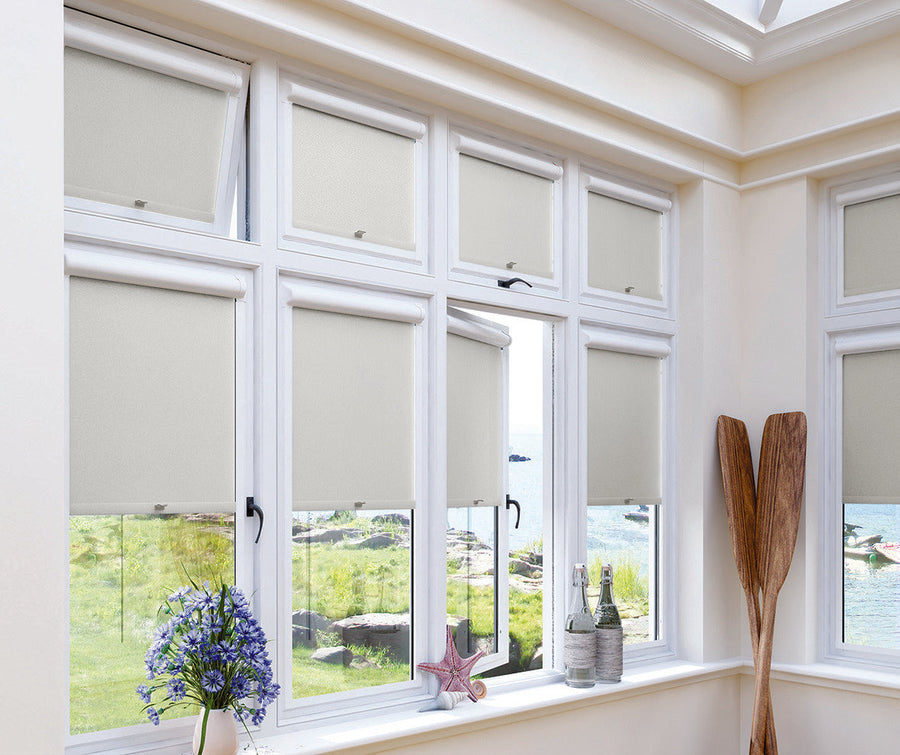
- Fit-to-frame blinds can help where you do not want to drill uPVC, and may be easier to remove later.
Light-coloured fabrics are common in lets because they suit most décor. A blackout option may be worth considering for bedrooms, but it is a preference rather than a necessity. Plain fabrics tend to work well, as they suit a wide range of tenants.
Plan ahead
A little planning can save a scramble between tenants:
- Keep a note of the size and type of each blind, so you can reorder if needed.
- Make a simple schedule of which blinds were replaced and when.
- Set aside some budget for replacements, since a few blinds will wear out sooner than others.
- If you have several properties, picking the same style may make things easier.
Our landlord blinds page and the guide to blinds for rented homes go into more detail.
Changeover checklist at a glance
- Photograph each window, dated.
- Test every blind.
- Check cords, chains and safety devices.
- Note wear and damage separately.
- Clean, repair or replace.
- Update your records.
Need help measuring up?
If several windows need replacing, accurate measuring saves mistakes. Book a free measure and we'll measure the windows and talk through options for the property.