Which blind works on sloping or shaped glazing?
Pleated blinds are one of the most widely used answers. Unlike a roller or Roman blind, which hang freely and rely on gravity, a pleated blind is held between rails and stays where you leave it. That makes it suited to roofs, conservatories and windows with angled or shaped tops. It is not the only choice and it will not suit every window, but it is usually a lovely first style to consider.
Why sloping windows need a different approach
Most blinds hang straight down. On a sloping window the fabric would sag away from the glass, swing about or snag on the frame. A shaped or angled window needs a blind that can be held in position, cut to the outline and guided along the slope. Pleated fabric is stiff enough to keep its folds and light enough to be moved by cords or a motor, which is why it works so well here.
How a pleated blind is built
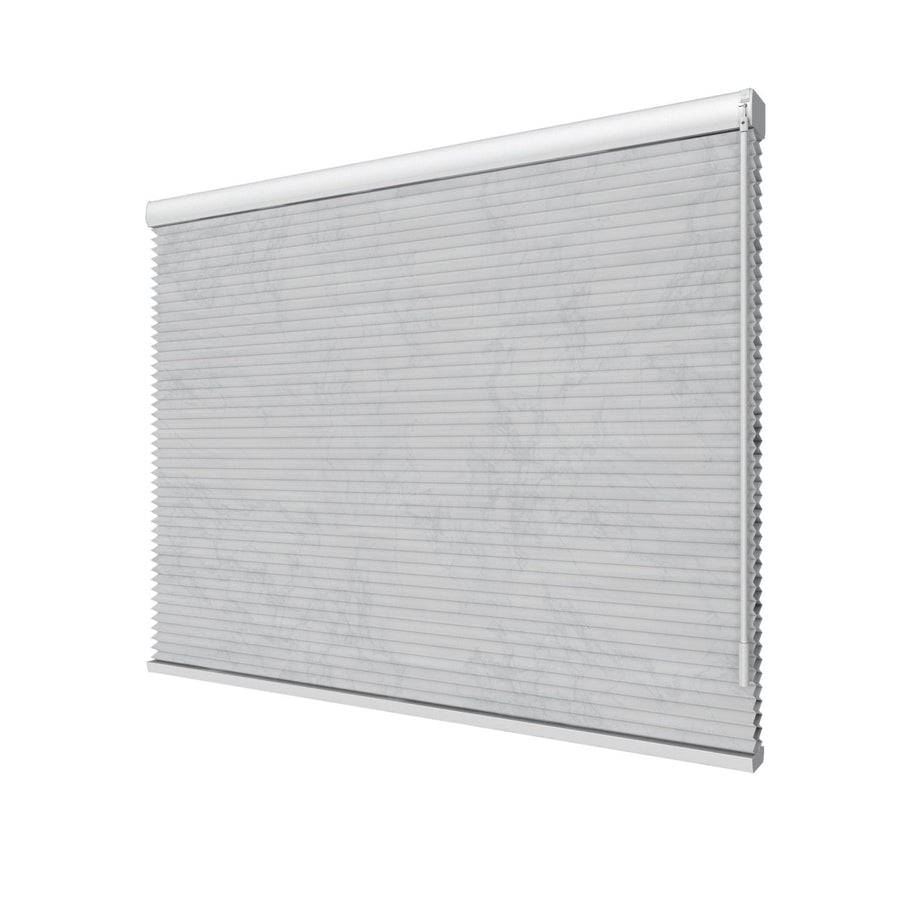
The fabric is folded into small pleats and stretched between a top rail and a bottom rail. Side cords or tracks hold both rails parallel to the glass. You move the bottom rail up or the top rail down, and it stays in place without a catch. Some systems allow both rails to move, so you can cover the lower half of a window and leave the top clear, or the other way round. See our page on pleated blinds.
Where they suit
- Roof windows and skylights. The blind runs parallel to the glass without drooping.
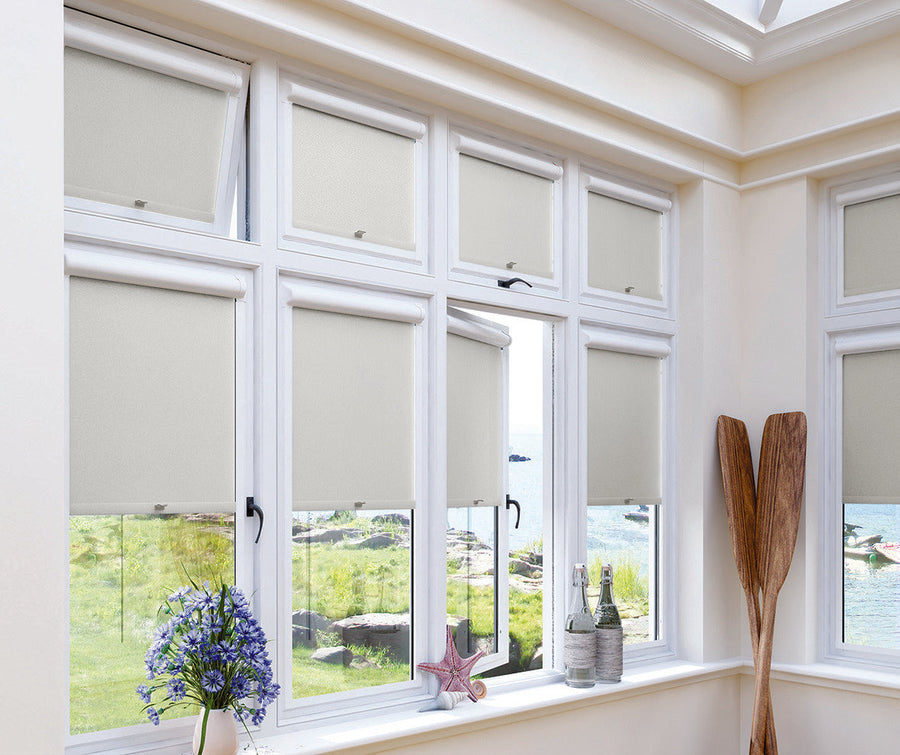
- Conservatories. Roof panels and angled side windows are common here. See conservatory blinds.
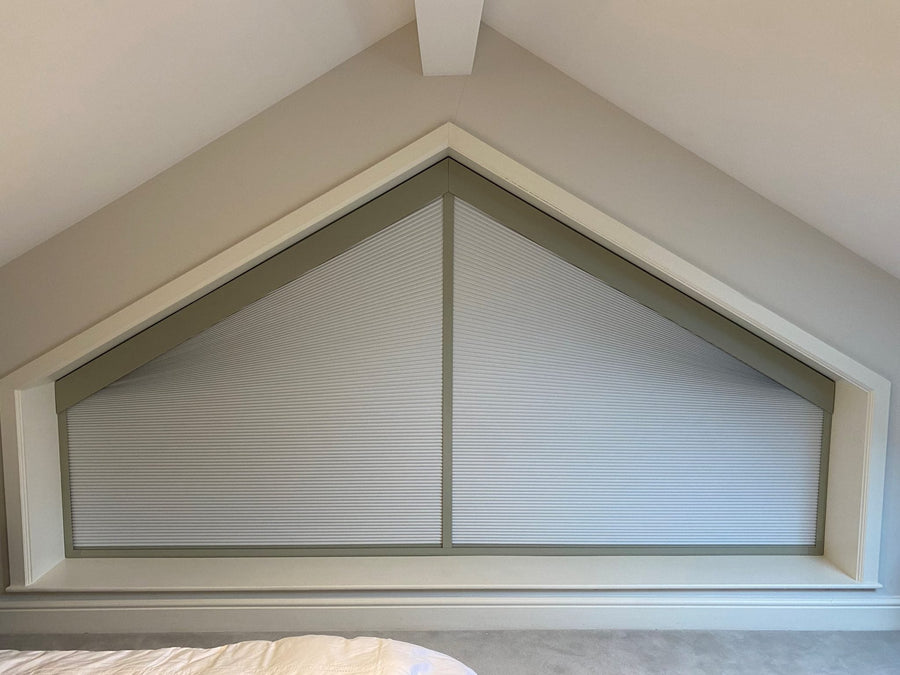
- Gable windows. The top edge can be cut to follow the slope. See roof and gable blinds.
- Arched and shaped windows. Subject to the maker's range and the shape.
- Narrow or small windows. The pleats stack neatly, which keeps the blind tidy.
Good to know
Pleated blinds suit a great many windows, and it helps to know a few limits. Large fabric areas can show faint sag or unevenness on long spans. Some shapes are tricky for a blind to follow, so a curved or very complex window may need a different approach. The fabric can attract dust at the folds, so a gentle clean now and then, using the maker's guidance, keeps it looking fresh. Pleated blinds also do not tilt like slats, so they do not angle light the way a venetian can.
Choosing the fabric
Pleated fabrics range from soft, light-filtering weaves to blackout and heat-aware designs. Think about the room first. A conservatory facing the sun needs something different from a bathroom. A bedroom needs darkness, while an office needs glare control without gloom. For a full list, see our pleated blind fabrics page and the product information for what each is designed to do. If you need a fabric with particular properties, such as fire retardant or antibacterial, tell us and we'll happily check what the maker says.
Controls for awkward positions
Shaped windows are often high. Options include cords, a pole or a motor. Cords on a high window can still hang within reach of children, so have a read of our child safety guidance. Motorised pleated blinds are available in some ranges, and can be useful for a roof you cannot reach. See motorised blinds.
A careful measure makes a difference
With a shaped window, a small error can leave a visible gap or stop the blind seating. Frames are rarely perfectly square, and angles are hard to judge by eye. A proper measure, sometimes with a template, avoids waste. Our guide to measuring awkward windows gives an idea of what is involved.
Pleated or something else?
If your window is flat and upright, you have more choice, and a roller, Roman or venetian may suit better. If it is sloped, shaped or hard to reach, pleated is often a practical starting point.
Take a photo of the window and note which way it faces and whether it opens. That tells us a lot about whether a pleated blind will suit, and what to look at if it does not.
Book a free measure
If you would like a second pair of eyes on the window, book a free measure and we'll talk it through with you at home, with the actual glass in front of us. Or call us on 01642 424250.