Will thermal blinds make a room warmer?
They can help, a little, in the right place. Most heat leaves a room through the glass, so adding a layer in front of it can slow that down. But "thermal" can mean different things, and the effect depends on the window, the blind and how you use it. A modest saving is a realistic thing to expect, and we prefer not to quote a number.
How a blind can reduce heat loss
Glass is a poor insulator compared with a wall. A blind helps in a few ways:
- It adds a layer of still air. The air trapped between the blind and the window acts as a small barrier.
- It reduces cold air movement. Cooled air near the glass sinks and flows into the room. A blind close to the window can interrupt that flow.
- It lowers the chill you feel. Sitting beside a cold window makes you feel colder, even if the room temperature is the same.
Three conditions make the biggest difference: the blind is closed when it is cold, it sits close to the glass, and the edges leave as small a gap as practical. A blind that is closed as the evening draws in is the one that helps most.
What "thermal" usually means
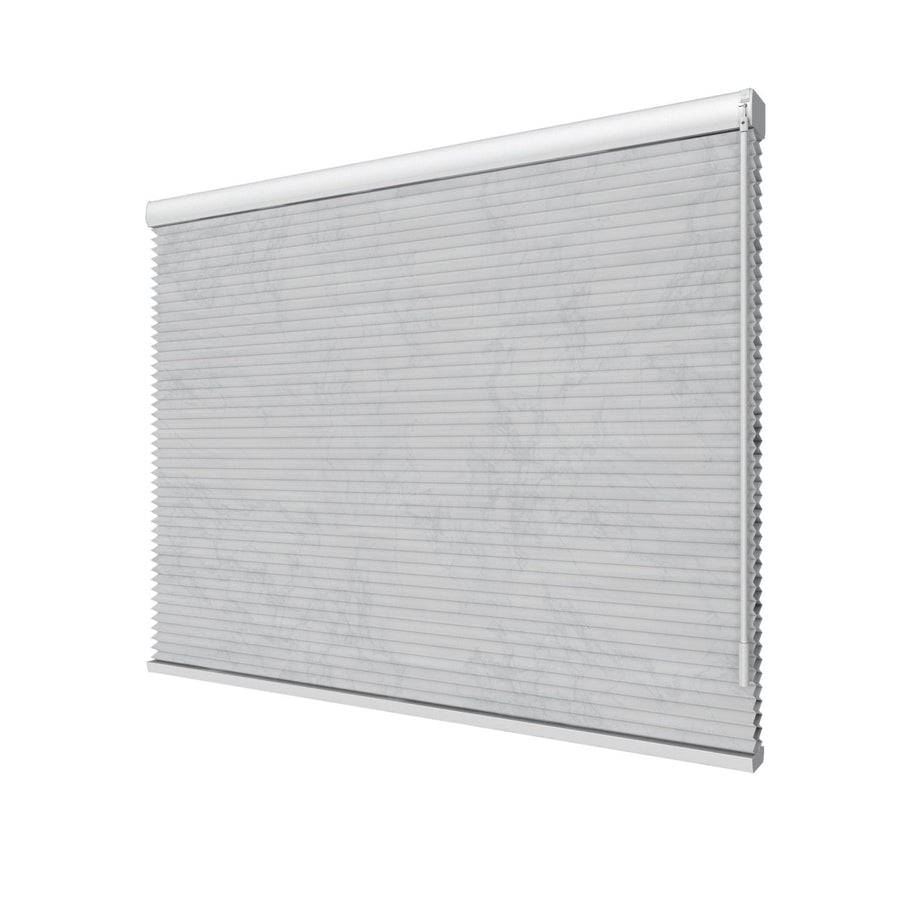
- Cellular (honeycomb) blinds have air pockets built into the fabric. These are among the most insulating blind types because the structure itself traps air. See our cellular blinds guide and the cellular blinds page.
- Roller blinds with a thermal or blackout backing add a second coating layer. A thicker, tightly woven fabric holds more back than a thin one, but a roller still has gaps at the sides.
- Curtains with a lining are good insulators because they are thick and can cover the whole window area. Curtains may beat blinds here.
Whether a particular product carries an official thermal rating or label is worth checking in the product details, as a name alone can be a little vague.
Where the benefit is smallest
- Modern double or triple glazing. The glass already does a lot of the work, so the gain from a blind is smaller.
- Rooms you rarely heat. Little to save if the radiator is off.
- Windows with a blind that is hardly ever closed. Closing it matters more than the type.
- Loose-fitting blinds with big gaps. Warm air still escapes round the edges.
Where it can help most
- Older single-glazed or poorly sealed windows.
- Large windows and patio doors that lose a lot of heat.
- Bedrooms and living rooms in the evenings, when blinds are naturally closed.
- North-facing rooms that get little sun.
Summer is the other side of the story
The same layer that slows heat leaving in winter can reduce unwanted sun in summer. That is covered in our article on keeping rooms cooler.
Start with the basics
If a draught is coming through a gap in the frame, a blind will not cure it, so sealing the gap is a good first step. Blinds and curtains work well alongside good windows, as an addition rather than a substitute. Our winter window guide covers layering.
How to get the most from what you choose
- Fit the blind as close to the glass as the window allows, ideally within the recess.
- Choose a thicker or cellular fabric for the rooms that feel coldest.
- Close the blinds when the light fades, before the temperature drops.
- Open them in the day when the sun is shining, so the glass can bring warmth in.
- Consider combining a blind with lined curtains for the coldest windows.
Our view
Thermal blinds are worth considering as part of keeping a room comfortable, particularly cellular ones on a cold window. They work alongside insulation rather than replacing it, and are best seen as a welcome boost in comfort. The benefit varies, so we would much rather talk through your windows and share a realistic view of whether a particular blind is likely to make a noticeable difference.
Our roller blinds come in many fabric options if a thicker weave is what you want. Book a free measure and we can look at your windows together.